

Main menu

  • Home
  • About
  • Who we are
  • News
  • Events
  • Publications
  • Search

Secondary Menu

  • Independent Science for Development CouncilISDC
    • Home
    • Who we are
    • News
    • Events
    • Publications
    • Featured Projects
      • Inclusive Innovation
        • Agricultural Systems Special Issue
      • Proposal Reviews
        • 2025-30 Portfolio
        • Reform Advice
      • Foresight & Trade-Offs
        • Megatrends
      • QoR4D
      • Comparative Advantage
  • Standing Panel on Impact AssessmentSPIA
    • About
      • Who we are
      • Our Mandate
      • Impact Assessment Focal Points
      • SPIA Affiliates Network
    • Our Work
      • Country Studies
        • Community of Practice
        • Bangladesh Study
        • Ethiopia Study
        • Uganda Study
        • Vietnam Study
      • Causal Impact Assessment
      • Use of Evidence
      • Cross-Cutting Areas
        • Capacity Strengthening
        • Methods and Measurement
        • Guidance to IDTs
    • Resources
      • Publications
      • Blog Series on Qualitative Methods for Impact Assessment
      • SPIA-emLab Agricultural Interventions Database
    • Activities
      • News
      • Events
      • Webinars
  • Evaluation
    • Who we are
    • News
    • Events
    • Publications
    • Evaluations
      • Science Group Evaluations
      • Learning on CGIAR's Ways of Working
      • Platform Evaluations
        • CGIAR Genebank Platform Evaluation
        • CGIAR GENDER Platform Evaluation
        • CGIAR Excellence in Breeding Platform
        • CGIAR Platform for Big Data in Agriculture
    • Framework and Policy
      • Evaluative Learning Hub
      • Evaluation Method Notes Resource Hub
      • Management Engagement and Response Resource Hub
      • Evaluating Quality of Science for Sustainable Development
      • Evaluability Assessments – Enhancing Pathway to Impact
      • Evaluation Guidelines
  • Independent Science for Development CouncilISDC
  • Standing Panel on Impact AssessmentSPIA
  • Evaluation
Back to IAES Main Menu

Secondary Menu

  • Home
  • Who we are
  • News
  • Events
  • Publications
  • Featured Projects
    • Inclusive Innovation
      • Agricultural Systems Special Issue
    • Proposal Reviews
      • 2025-30 Portfolio
      • Reform Advice
    • Foresight & Trade-Offs
      • Megatrends
    • QoR4D
    • Comparative Advantage
Blog

A Lasting Impact: Reflecting on Nompumelelo Obokoh’s Contributions to ISDC

You are here

  • Home
  • Independent Science for Development CouncilISDC
  • News
  • A Lasting Impact: Reflecting on Nompumelelo Obokoh’s Contributions to ISDC

As Nompumelelo Obokoh concluded her service as a Member and Vice Chair of the Independent Science for Development Council (ISDC), the council took the opportunity to reflect on a tenure marked by both substance and spirit.

Mpumi played a defining role in ISDC’s recent evolution. As its first-ever Vice Chair, she helped shape the council’s direction at a critical time, bringing with her a strong foundation in innovation systems and a clear, thoughtful approach to complex scientific and strategic questions. Her ability to guide discussions toward clarity and action, combined with her collaborative and warm leadership style, left a lasting impression on both the council’s work and its culture.

Strengthening CGIAR’s Research Direction

Within the broader context of the CGIAR, ISDC serves as an independent advisory body on the quality and effectiveness of research for development. Mpumi’s contributions were central to strengthening this role.

She contributed extensively to ISDC’s reflections on the evolution of CGIAR's portfolio, helping to articulate practical approaches to assessing Quality of Research for Development (QoR4D), Comparative Advantage (CA), and inclusive innovation. Her work consistently bridged conceptual thinking with actionable insights, ensuring that ISDC’s advice remained both rigorous and relevant.

Since 2021, she had been actively involved in multiple portfolio reviews and in ISDC’s Megatrends work, helping situate CGIAR’s research within broader global dynamics. Her expertise made her a natural leader in the review of breeding programs, where she brought depth, clarity, and critical insight. She also contributed important perspectives on cross-cutting issues such as capacity sharing, reinforcing the importance of strengthening systems alongside delivering research outputs.

Championing Inclusive Innovation and Partnerships

Mpumi’s impact extended well beyond internal advisory work. She played a key role in communicating ISDC’s thinking and representing its work in global forums.

At the ISDC Science Forum 2024, she presented research from the Agricultural Systems special issue on advancing inclusive and effective agrifood systems research for development—an area closely aligned with ISDC’s sustained focus on inclusive innovation. In 2022, she led a session on inclusive partnerships for One CGIAR at the TropAg Conference in Brisbane, emphasizing the importance of collaboration in achieving meaningful development outcomes.

At a side event of the Food and Agriculture Organization Science and Innovation Forum in 2022, she helped frame discussions on how QoR4D could strengthen institutional innovation. She was also invited to speak at CGIAR Science Week, further highlighting her role as a visible and trusted representative of ISDC. Over time, she became one of the council’s most recognizable voices in external engagements.

A Lasting Contribution

Mpumi’s contribution to ISDC was distinctive not only in what she did, but in how she did it. Her thoughtful engagement, generosity, and ability to foster constructive dialogue strengthened both the quality of ISDC’s advice and the cohesion of its community.

Her departure marked the end of an important chapter for ISDC. At the same time, the influence of her work—across portfolio reviews, strategic reflections, and global engagement—continues to shape the council’s contribution to CGIAR’s mission.

Her legacy remains embedded in a stronger, more connected ISDC, and in the continued pursuit of science that advances sustainable and inclusive development.

ISDC extends its best wishes as she takes on new responsibilities, including her role with the World Intellectual Property Organization, and looks ahead to future moments of shared work and exchange.
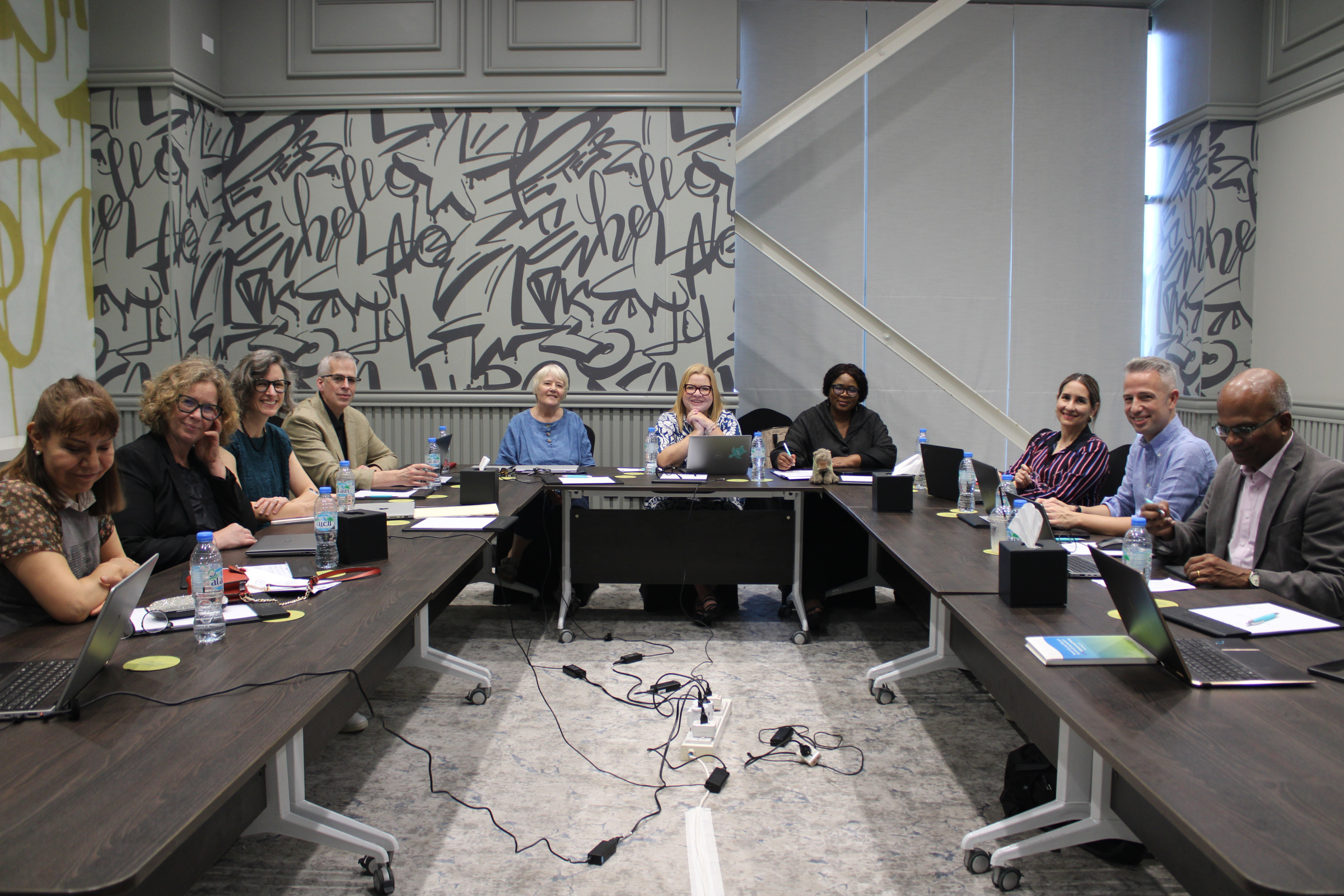
"It has been a privilege to work alongside such a diverse and talented team, and I deeply appreciate the collaboration, insights, and spirit that have made ISDC’s work so meaningful." - Nompumelelo Obokoh.
Share on

Science ISDC
Mar 30, 2026

Written by

  • Domagoj Vrbos

    Senior Manager, Operations and Events, IAES & ISDC Secretariat
  • Lesley Torrance

    ISDC Chair

Related News

Posted on
09 Feb 2026
by
  • Amy R. Beaudreault

Beyond Barbie: Women Leading Global Science at CGIAR

Posted on
26 Jan 2026
by
  • Erin Lentz
  • Holger Meinke

Tools to Support Consistent, Transparent, and Future-ready CGIAR Prioritization Decisions

Posted on
16 Dec 2025
by
  • Ines Gonzalez de Suso
  • Domagoj Vrbos

Guiding the Future of CGIAR Science: ISDC’s Year in Focus

More News

Related Publications

Strategic & Synthesis Studies
Science ISDC
Issued on 2025

Brief Primer on Tools to Prioritize a Research and Innovation Portfolio in a Complex System Involving Multiple Decision Makers

ISDC review cover page
Assessments & Commentaries
Science ISDC
Issued on 2025

ISDC Review of 2025-2030 Research and Innovation Inception Reports

Assessments & Commentaries
Science ISDC
Issued on 2024

ISDC Feedback on CGIAR Portfolio Narrative 2025-2030

More publications

CGIAR Independent Advisory and Evaluation Service (IAES)

Alliance of Bioversity International and CIAT
Via di San Domenico,1
00153 Rome, Italy
  • IAES@cgiar.org
  • (39-06) 61181

Follow Us

  • LinkedIn
  • Twitter
  • YouTube
JOIN OUR MAILING LIST
  • Terms and conditions
  • © CGIAR 2026

IAES provides operational support as the secretariat for the Independent Science for Development Council and the Standing Panel on Impact Assessment, and implements CGIAR’s multi-year, independent evaluation plan as approved by the CGIAR’s System Council.