Main menu

  • Home
  • About
  • Who we are
  • News
  • Events
  • Publications
  • Search

Secondary Menu

  • Independent Science for Development CouncilISDC
    • Home
    • Who we are
    • News
    • Events
    • Publications
    • Featured Projects
      • Inclusive Innovation
        • Agricultural Systems Special Issue
      • Proposal Reviews
        • 2025-30 Portfolio
        • Reform Advice
      • Foresight & Trade-Offs
        • Megatrends
      • QoR4D
      • Comparative Advantage
  • Standing Panel on Impact AssessmentSPIA
    • About
      • Who we are
      • Our Mandate
      • Impact Assessment Focal Points
      • SPIA Affiliates Network
    • Our Work
      • Country Studies
        • Community of Practice
        • Bangladesh Study
        • Ethiopia Study
        • Uganda Study
        • Vietnam Study
      • Causal Impact Assessment
      • Use of Evidence
      • Cross-Cutting Areas
        • Capacity Strengthening
        • Methods and Measurement
        • Guidance to IDTs
    • Resources
      • Publications
      • Blog Series on Qualitative Methods for Impact Assessment
      • SPIA-emLab Agricultural Interventions Database
    • Activities
      • News
      • Events
      • Webinars
  • Evaluation
    • Who we are
    • News
    • Events
    • Publications
    • Evaluations
      • Science Group Evaluations
      • Learning on CGIAR's Ways of Working
      • Platform Evaluations
        • CGIAR Genebank Platform Evaluation
        • CGIAR GENDER Platform Evaluation
        • CGIAR Excellence in Breeding Platform
        • CGIAR Platform for Big Data in Agriculture
    • Framework and Policy
      • Evaluative Learning Hub
      • Evaluation Method Notes Resource Hub
      • Management Engagement and Response Resource Hub
      • Evaluating Quality of Science for Sustainable Development
      • Evaluability Assessments – Enhancing Pathway to Impact
      • Evaluation Guidelines
  • Independent Science for Development CouncilISDC
  • Standing Panel on Impact AssessmentSPIA
  • Evaluation
Back to IAES Main Menu

Secondary Menu

  • Home
  • Who we are
  • News
  • Events
  • Publications
  • Featured Projects
    • Inclusive Innovation
      • Agricultural Systems Special Issue
    • Proposal Reviews
      • 2025-30 Portfolio
      • Reform Advice
    • Foresight & Trade-Offs
      • Megatrends
    • QoR4D
    • Comparative Advantage
Domagoj Vrbos/IAES
Blog

Guiding the Future of CGIAR Science: ISDC’s Year in Focus

You are here

  • Home
  • Independent Science for Development CouncilISDC
  • News
  • Guiding the Future of CGIAR Science: ISDC’s Year in Focus

As 2025 draws to a close, it has almost become a tradition for the Independent Science for Development Council (ISDC) Secretariat to reflect on what marked the year. For ISDC, 2025 was a year of deep engagement—fresh perspectives from new members and reflection from those leaving the Council—all coupled with strengthened support to CGIAR’s mission of delivering high-quality and -impact science. From launching new learning tools to shaping CGIAR’s research Portfolio, ISDC’s work this year reflected both continuity and evolution.

A Learning Leap: ISDC 101 Goes Live

This year saw the launch of ISDC 101, a free and interactive online learning tool designed to explain the why, who and what of ISDC’s role within CGIAR. Created to support stakeholders, researchers, and newcomers to the CGIAR system, ISDC 101 made the Council’s work more transparent and accessible than ever before. Conceived as a live tool, ISDC 101 will be updated regularly to reflect the evolving work of ISDC within the integrated partnership.

Strengthening the CGIAR 2025–2030 Science and Innovation Portfolio

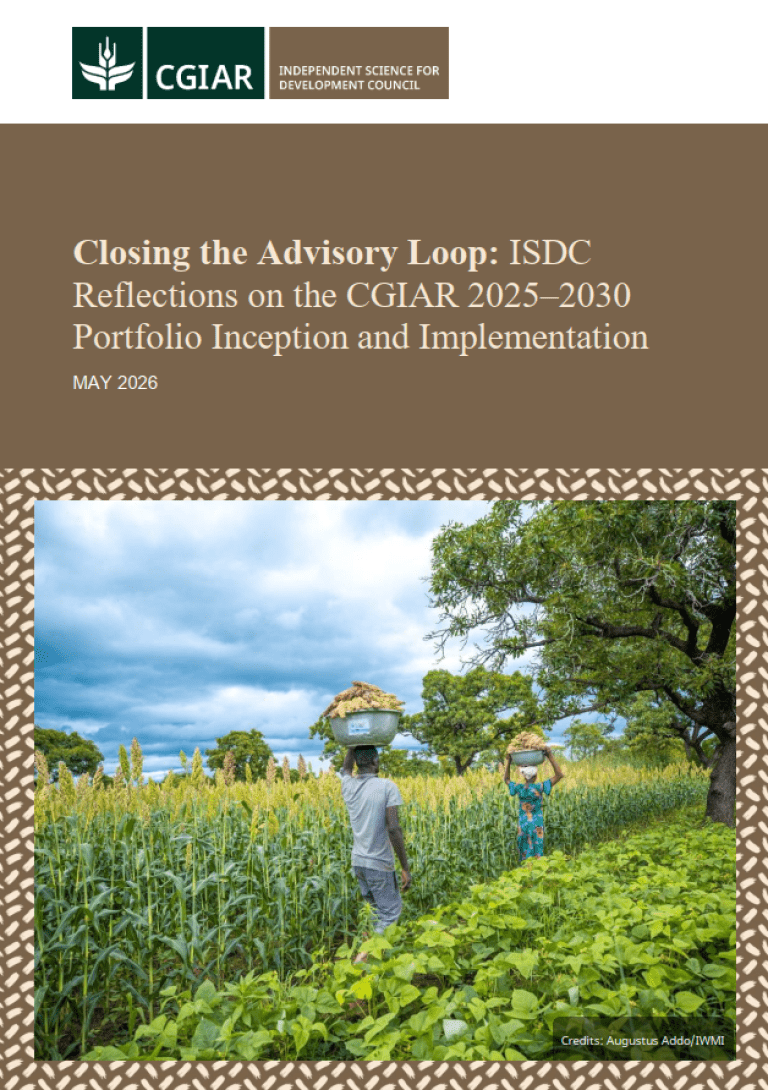
A major focus in 2025 was ISDC’s review of CGIAR’s Inception Reports of the 2025–2030 Science and Innovation Portfolio. The review assessed whether the research environment is well positioned to deliver rigorous science and meaningful, global development impact. It also evaluated how effectively previously identified gaps (late 2024) were addressed by mid-2025. The review process was captured in this blog. In a year of challenges faced by CGIAR’s operating environment, ISDC also collated its tools developed from 2020 to aid ongoing and future prioritization efforts. 

Leadership Transitions: Welcoming a New Chair

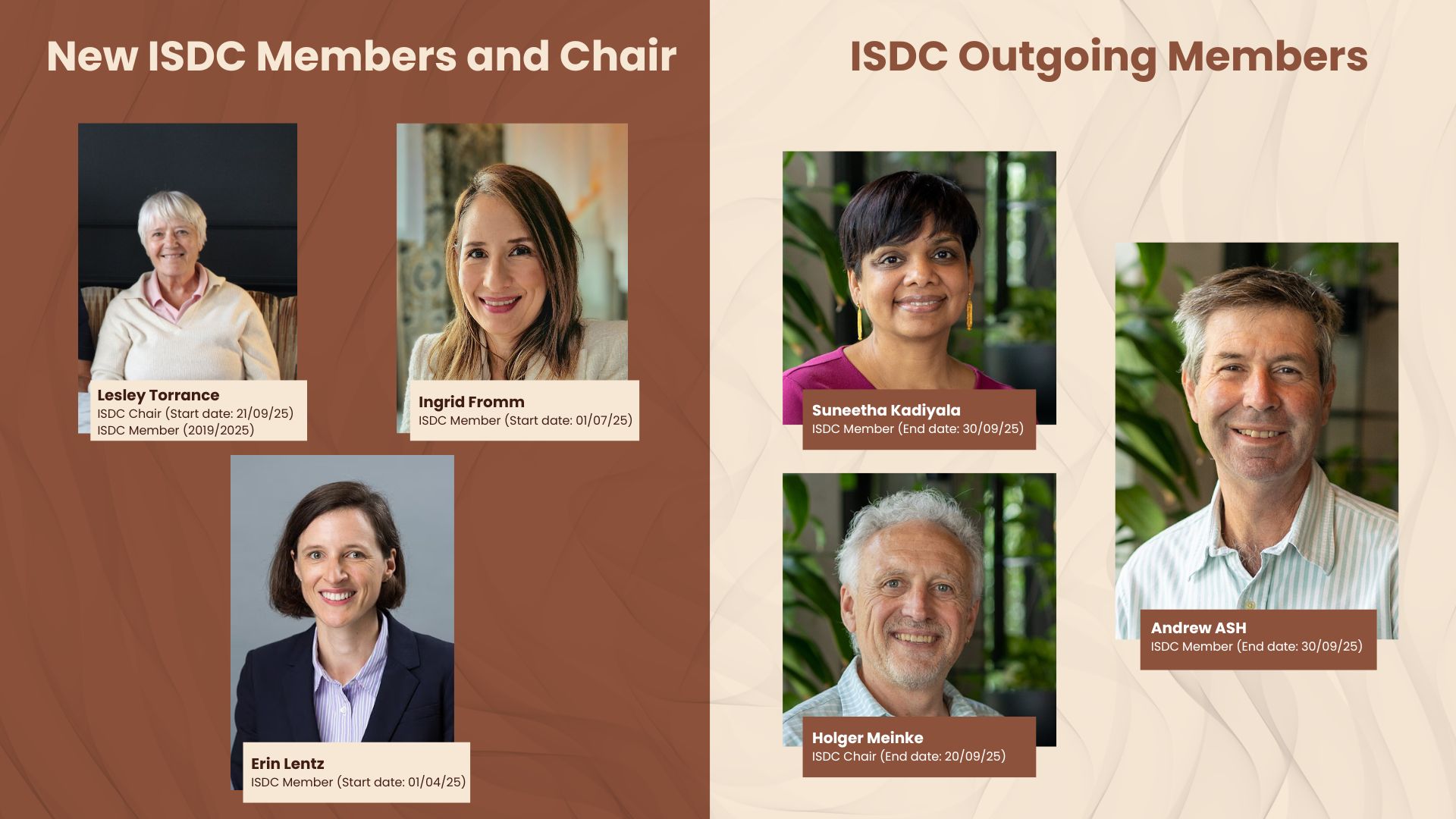
ISDC celebrated a major milestone as Lesley Torrance stepped into the role of Chair, taking over from Holger Meinke, who completed six years of dedicated leadership and shared his reflections in a blog. The Council also saw membership changes, with new members joining and others concluding their service after making valuable contributions to ISDC’s work. Next year, we will continue the transition, welcoming two new members that will complete the Council turnover in this business cycle.
ISDC on the Move

ISDC held two in-person meetings in 2025:

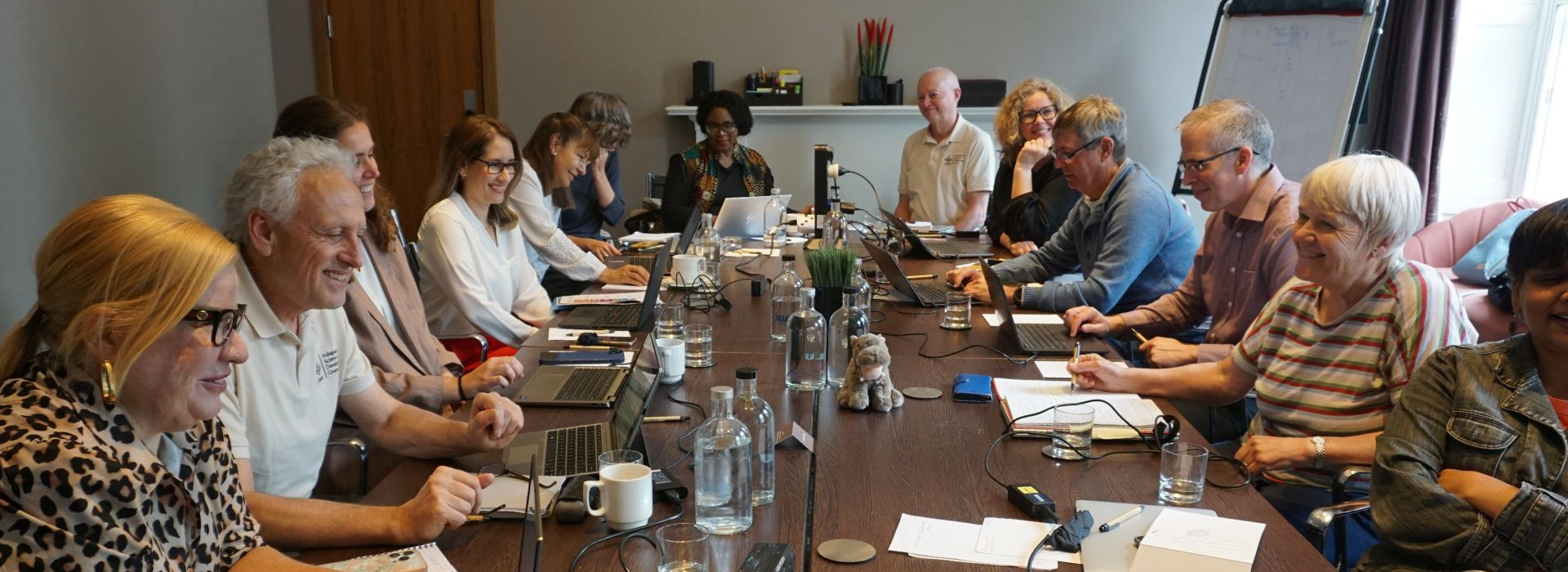
  • Edinburgh (July): A mid-year gathering focused on finalizing the review of the CGIAR 2025-2030 Portfolio Inception Reports, and to onboard the new ISDC members. ISDC also visited the James Hutton Institute where the new ISDC Chair Lesley Torrance is an Honorary Fellow.
  • Abu Dhabi (December): The meeting took place after the System Council 23 meeting to enhance interaction with ISDC stakeholders, optimize resources and discuss outcomes. It was a great opportunity to discuss the 2026 workplan with the new ISDC Chair and Members 

ISDC’s Chair, Vice Chair, and several members were also active contributors at CGIAR Science Week in Nairobi, presenting insights and engaging with global stakeholders. The Chair also engaged regularly with the Integrated Partnership Board (IPB) and attended the Global Assembly of Centers (GAC) for the first time.
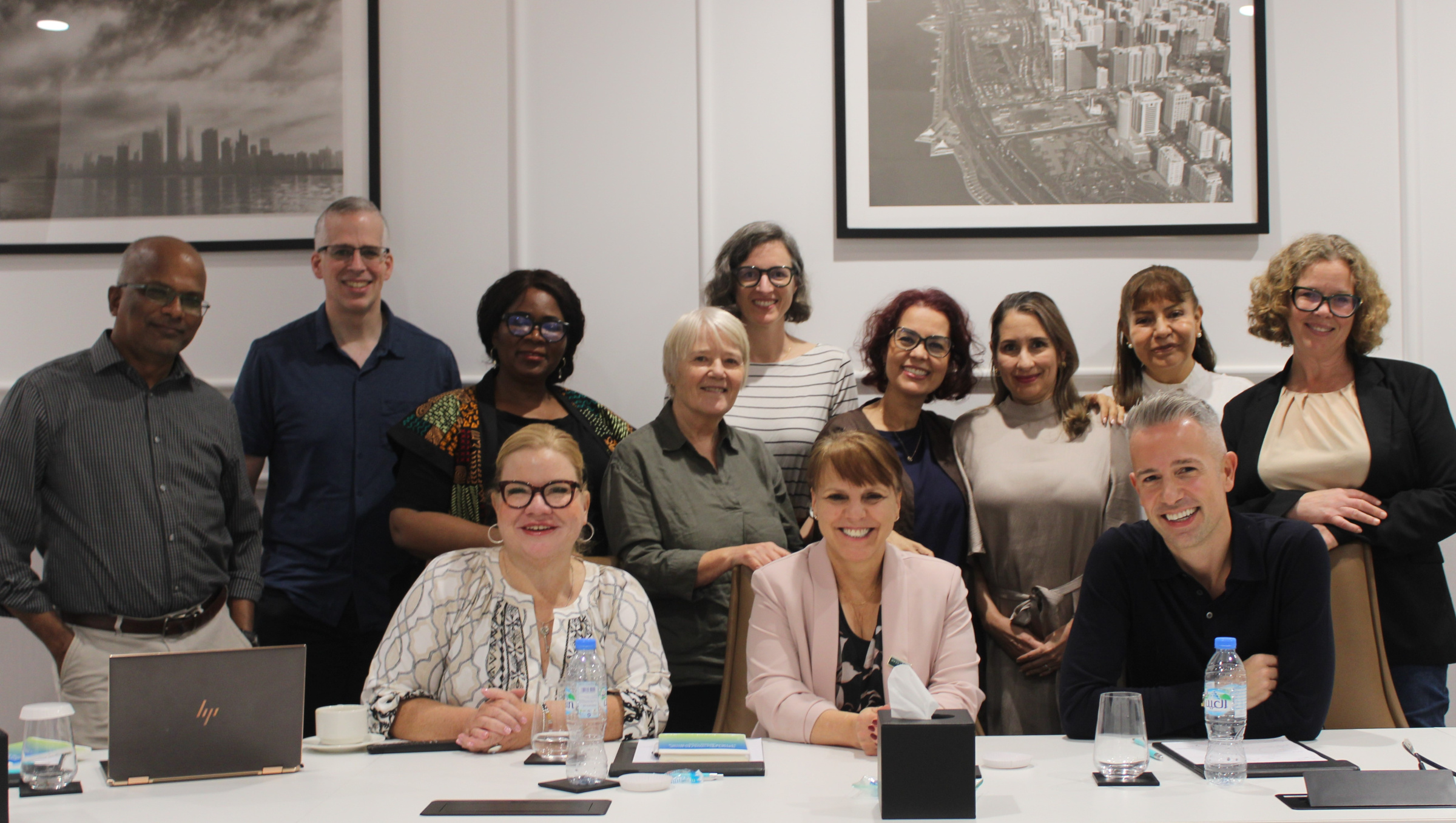
ISDC met with Ismahane Elouafi (Executive Managing Director of CGIAR) and Sandra Milach (CGIAR Chief Scientist) during the meeting in Abu Dhabi. Credits: Ines Gonzalez de Suso/IAES

Looking Ahead

With new members, new tools, and a strengthened partnership with our stakeholders and CGIAR researchers, the Council enters 2026 ready to continue championing scientific excellence in research for development. 

With best holiday wishes from the Secretariat to the Council and all our readers, don’t forget to:

  • Subscribe to the Independent Advisory and Evaluation Service (IAES) newsletter
  • Follow us on LinkedIn
  • Complete ISDC 101 😊

Share on

Science ISDC
Dec 16, 2025

Written by

  • Ines Gonzalez de Suso

    Secretariat Officer, ISDC
  • Domagoj Vrbos

    Senior Manager, Operations and Events, IAES & ISDC Secretariat

Related News

Posted on
14 Oct 2025
by
  • Holger Meinke

Six Years of Science Leadership: A Conversation with Outgoing ISDC Chair Holger Meinke

Posted on
20 Aug 2025
by
  • Ines Gonzalez de Suso
  • Lesley Torrance

Science in Bloom: ISDC Visits the James Hutton Institute in Scotland

Posted on
02 Jun 2025
by
  • Amy R. Beaudreault
  • Holger Meinke

ISDC’s Northern Summer Assignment: Inception Report Reviews

More News

Related Publications

Strategic & Synthesis Studies
Science ISDC
Issued on 2025

Brief Primer on Tools to Prioritize a Research and Innovation Portfolio in a Complex System Involving Multiple Decision Makers

ISDC review cover page
Assessments & Commentaries
Science ISDC
Issued on 2025

ISDC Review of 2025-2030 Research and Innovation Inception Reports

Assessments & Commentaries
Science ISDC
Issued on 2024

ISDC Review of 2025-2030 Research & Innovation Portfolio Proposals

More publications

CGIAR Independent Advisory and Evaluation Service (IAES)

Alliance of Bioversity International and CIAT
Via di San Domenico,1
00153 Rome, Italy
  • IAES@cgiar.org
  • (39-06) 61181

Follow Us

  • LinkedIn
  • Twitter
  • YouTube
JOIN OUR MAILING LIST
  • Terms and conditions
  • © CGIAR 2025

IAES provides operational support as the secretariat for the Independent Science for Development Council and the Standing Panel on Impact Assessment, and implements CGIAR’s multi-year, independent evaluation plan as approved by the CGIAR’s System Council.